
Electronic waste is piling up faster than ever, with this growing problem lies a powerful opportunity. In Gauteng, where digital technology is expanding rapidly, government and partners are working together to turn old electronics into new chances for jobs, innovation, and sustainability. A recent gathering of key stakeholders set the stage for a greener digital future built on action, inclusion, and smart solutions.
This gathering took place at the Gauteng Department of e-Government Waste Electrical and Electronic Equipment (WEEE) Conference, held on 9 and 10 October 2025 at Thaba Eco Hotel in Klipriviersberg.
The two-day event brought together government officials, environmental experts, entrepreneurs, academics, and e-waste collectors to tackle the province’s growing e-waste challenge and explore ways to turn it into lasting social and economic value. The goal was to move beyond awareness and collaboratively develop a long-term vision for sustainable e-waste management in Gauteng.
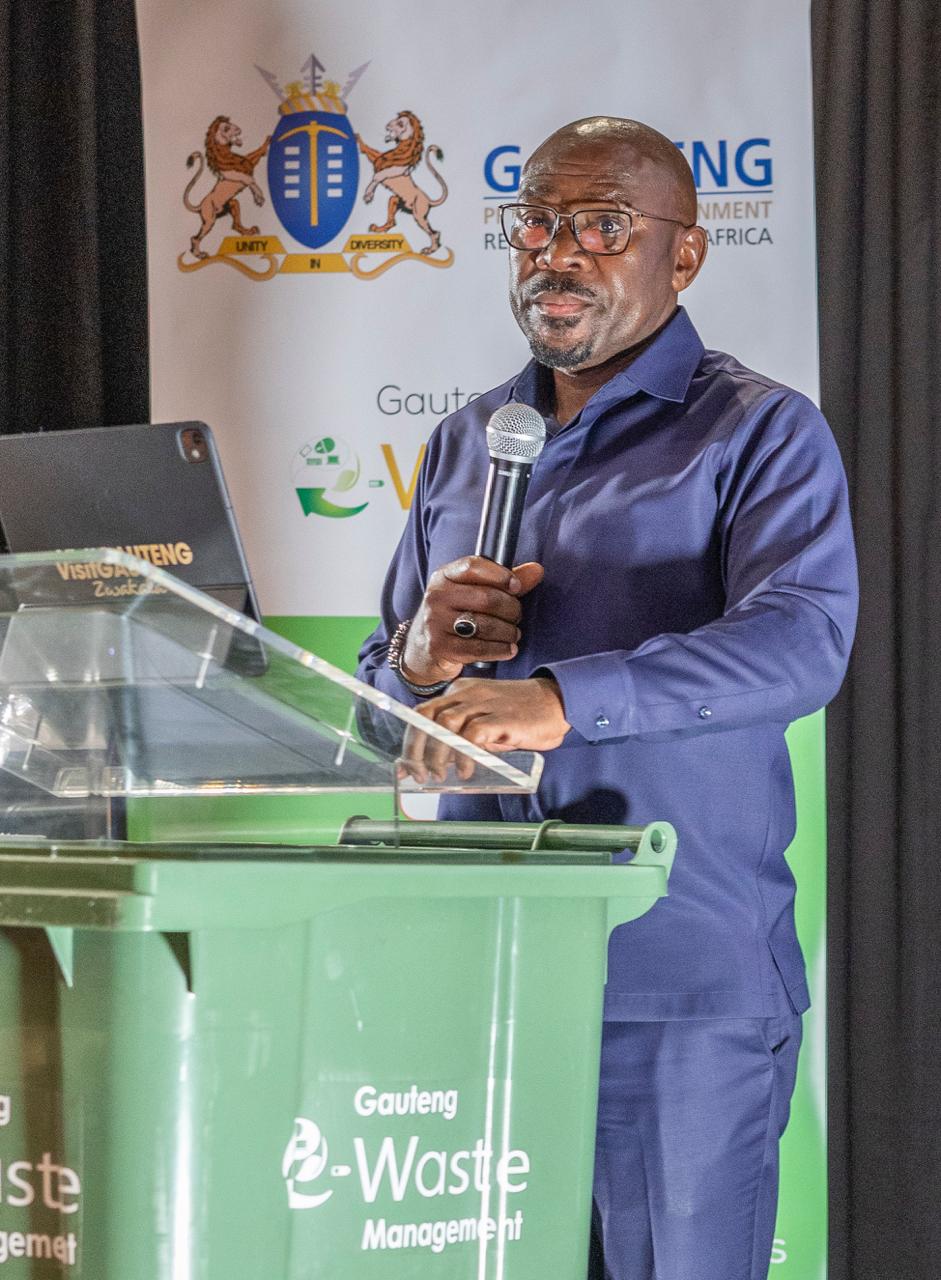
At the conference Gauteng MEC for e-Government, Bonginkosi Dhlamini, highlighted the province’s commitment to transforming e-waste from an environmental threat into an opportunity for economic inclusion and innovation. He stressed that e-waste should not be seen merely as a by-product of technological progress but as a challenge that, if addressed correctly, can promote green jobs and community empowerment.
“Together, we can turn e-waste to good use. Together, we can unlock our communities’ potential and build a future that is not only digital but truly sustainable,” said MEC Dhlamini.
The MEC emphasised that sustainable digital transformation must involve and benefit all people, particularly those in underserved communities.
“We cannot speak of digital progress if our communities remain excluded from the green economy,” he added. “By investing in township recycling initiatives and skills development, we are not only protecting the environment, but we are also opening new doors for youth and women to thrive in a digital age,” said MEC Dhlamini.
He also called on the private sector to play a more active role in building an inclusive e-waste value chain.
“The time has come for business and government to work together, not only to manage waste, but to create a circular economy that builds resilience, creates jobs, and leaves no one behind,” said Dhlamini.
Throughout the conference, discussions focused on building a circular economy in which electronic products are reused, refurbished, and responsibly recycled. Participants examined national policy frameworks such as the National Waste Management Strategy 2020, explored municipal implementation models, and considered how township-based enterprises could play a role in the local collection and refurbishment of devices.
Ms. Palesa Mathibeli, Director for Pollution and Waste Management at the Department of Environment, reinforced the importance of community action and everyday responsibility in the recycling chain.
“Waste is not just something to throw away, waste is a resource, waste is wealth. This is especially true for electronic waste, which contains valuable materials like copper, gold, and rare earth elements that can be recovered and reused. When we separate our waste at home, especially e-waste, we make it easier to recover these materials and support recycling jobs”
“That’s why we are introducing new regulations in Gauteng that will require households to separate their waste. But before we begin, we’ll be rolling out an education campaign to help communities understand how and why it matters”, she said.
The second day of the event was dedicated to action planning. Delegates formed commissions and working groups to begin drafting a five-year provincial action plan. This includes strategies to expand public education, improve municipal recycling infrastructure, build local skills for e-waste management, promote innovation in sustainable electronics, and foster public-private partnerships that link environmental management with inclusive economic growth.
SUPPLIED.