

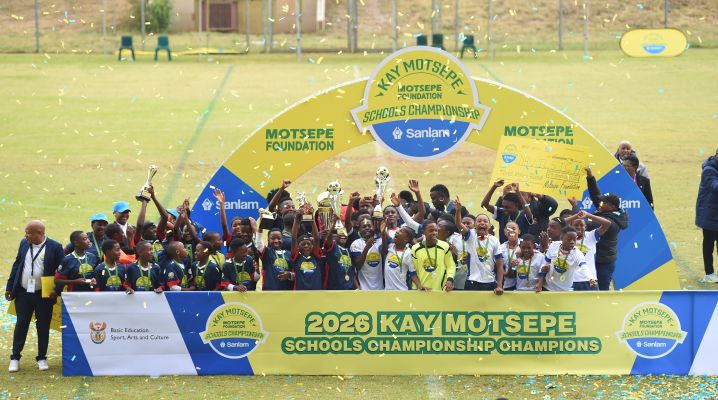
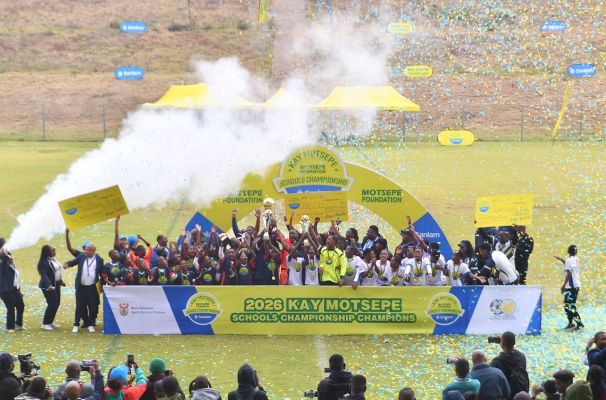
The celebrations at the conclusion of the 2026 Sanlam and Motsepe Foundation Kay Motsepe Schools Football Championship National Finals told only half the story. At Soshanguve’s Giant Stadium, the final whistle marked the end of the tournament—but not the end of its impact.
Gauteng’s Laerskool Queenswood (U-13 Boys), Mpumalanga’s St Marks Academy (U-13 Girls) and the Free State’s Navalsig High School (U-19 Boys) lifted their respective trophies late in September. Their victories, however, extend beyond silverware and winners’ medals.
For over two decades, South Africa’s premier youth sports tournament has operated under a mandate to turn prize money into tangible, long-term infrastructure projects that uplift entire communities. Backed by R20 million in annual funding, the tournament requires prize money to be used strictly for these projects rather than as unrestricted cash awards.
Bricks, Mortar, and Clean Water
From drilling boreholes to constructing modern learning environments, the tournament’s infrastructure model positions winning schools as centres of community development. Schools across three provinces now plan to build on that legacy with projects funded by their 2026 winnings.
In Bloemfontein, U-19 Boys champions Navalsig High School plan to use their R3 million grand prize to upgrade both their academic and sporting facilities.
“The prize money is going to help the school immensely by upgrading our infrastructure and improving our fields,” said Navalsig High head coach Mzwakhe James. “We plan to develop two additional fields, improve student transport, renovate our classrooms, and sink a borehole to ensure sustainable water access.”
In Gauteng, U-13 Boys national champions Laerskool Queenswood from Pretoria plan to use their winnings to build a lasting legacy for the school and its surrounding community. Their R1 million national title prize is in addition to R100,000 in provincial winnings.
“These winnings play a massive role for the school and the surrounding community,” explained Laerskool Queenswood coach Lunga Nobela. “Previously, tournament funds allowed us to address critical plumbing, install boreholes, build solar power systems so exams aren’t disrupted, and renovate classrooms.
“With our 2026 winnings, we are building a dedicated multi-purpose facility. Currently, our learners have to outsource tennis courts outside school grounds, but now we will build our own facility that the broader community can also access. It is all about creating a legacy that benefits future generations.”
Similarly, U-13 Girls champions St Marks Academy from Mbombela, Mpumalanga, plan to use their R1 million grant to improve facilities at the academy for the benefit of their learners and neighbouring schools.
“This funding will dramatically improve our school facilities and sports grounds,” said St Marks Academy head coach Elsie Matukane. “As an academy that offers bursaries to scouted players from underprivileged families, upgraded facilities directly uplift the community.
“We plan to build a mini-stadium with proper grandstands and grass pitches, upgrade our netball courts, and renovate our tennis and volleyball courts. Local schools regularly use our facilities for athletics and events, so this benefits the entire region.”
Purpose-Driven Community Support
The community-first model is designed to address systemic socio-economic challenges, explains Peter Ledwaba, Head of Sports for Motsepe Foundation.
“The prize money is tailored to solve specific infrastructure needs requested directly by the schools,” says Peter Ledwaba. “When a borehole or solar system is installed, it is structured so the surrounding area benefits as well. It restores dignity, ensures children don’t miss school due to water or power shortages, and turns schools into true pillars of community empowerment.”
A Legacy That Lives On
Since its inception in 2004, the Kay Motsepe Schools Football Championship has impacted hundreds of schools annually through direct grants and competitive participation.
Long after the stadium lights in Soshanguve have dimmed, the legacy of the 2026 finals will depend on what follows: classrooms, clean water, solar power and sporting facilities intended to serve South Africa’s youth for generations to come.
SUPPLIED.