

Practical early childhood development advice for schools and parents
As South Africa grapples with persistent challenges in Early Childhood Development, the conversation must move beyond access alone to impact, because the country’s future is being shaped long before children start school.
The Early Childhood Development (ECD) stage, spanning from birth to five years old and extending into Grade R, is more than just playtime – it’s the foundational phase where a child’s brain, social skills, and learning habits are shaped. Investing in this period sets the stage for lifelong academic success, and schools and parents have a crucial role to play, an academic expert says.
According to Harvard University’s Center on the Developing Child:
- Brains are built over time, from the bottom up, through an ongoing process that begins before birth. Simple neural connections form first, followed by more complex circuits.
- The connections that form early provide either a strong or weak foundation for the connections that form later.
- Our early experiences shape our brain architecture, which provides the foundation for all future learning, behavior, and health.
“The early years are a golden window for building cognitive, emotional, and physical skills that influence future success in school and beyond. Igniting curiosity in children and supporting their optimal development during these years have a lifelong impact,” says Desiree Hugo, Executive: ADvTECH Schools Academics.
Hugo says it was encouraging to see recent pronouncements by both the Ministers of Basic and Higher Education, Ministers Siviwe Gwarube (SA needs to focus more on early learning) and Buti Manamela (Renewed emphasis on ECD and foundational learning not just welcome, but essential), highlighting the importance of the early years on future academic performance.
“We support the position of the ministers, which aligns with ADvTECH’s commitment to lifelong learning and early intervention, by offering our children opportunities to explore, create and consistently inquire,” she says.
Hugo says while parents often direct their focus to finding the best possible high school for their child, greater attention should be given to a child’s early years’ experience – both in terms of accessing the best possible education, as well as providing support at home.
“During early childhood, children develop essential building blocks such as inquiry, language, problem-solving, and self-regulation through play-based activities. High-quality ECD schools foster curiosity, creativity, and social interaction, which translate into better reading, math, and critical thinking skills later on,” she says.
“We have empirical evidence to support this by considering our MAP results which highlight that children who attend our programmes have shown a significant higher performance later on, than those who have not been in our early years programs.
“Children who receive strong ECD support are more likely to perform well academically, exhibit positive behaviour, and perform well throughout their academic journey. Conversely, gaps in early development can lead to learning and other challenges that persist into adulthood. By prioritising ECD, parents and educators lay a robust foundation, helping children thrive in an increasingly competitive world.”
HOW PARENTS AND SCHOOLS CAN SUPPORT EARLY CHILDHOOD DEVELOPMENT
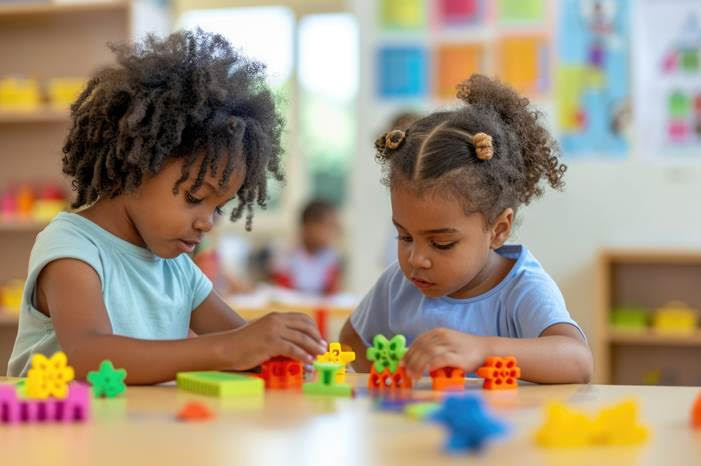
Encourage play-based learning and develop creativity: Provide items such as blocks, puzzles, and art supplies to spark imagination and fine motor skills – aim for 30 minutes of unstructured play daily. Let children do observational drawings, by drawing items placed in front of them, rather than colouring in templates, this builds planning and skills that ensure observing and noticing detail in items.
Read together regularly and allow children to create their own stories: Share books every day to build vocabulary and listening skills; make it fun by using different voices or build comprehension skills by asking questions about the story. Give children three items to create a story based on the items, encourage the use of exciting adjectives in their descriptions.
Foster social interactions: Arrange playdates or group activities to help children learn sharing, empathy, and communication. Start with short, supervised sessions.
Establish routines: Create consistent daily schedules for meals, naps, and bedtime to promote self-regulation and a sense of security. Build these schedules with your child, and invite them to tick off completed tasks.
Limit screen time: Keep digital exposure (including television) to under one hour per day, opting for educational content when used, and prioritise real-world experiences instead.
Promote physical activity: Encourage outdoor play, like running or climbing, to develop gross motor skills and overall health – at least 60 minutes of active play each day.
Talk and listen actively: Engage in conversations about their day or feelings to enhance language development and emotional intelligence. Here, parents must ensure they themselves are fully present and responsive. Listen to your children’s theories rather than just giving answers and responses – ask them what they are thinking that makes them say what their theory is. Encourage questioning and let them provide answers, which builds cognition and deepens learning.
Monitor milestones: Keep track of developmental progress, and consult professionals if concerns arise.
SUPPLIED.