
Trialogue Business in Society Conference 2026 dialogue highlights shifting global dynamics, youth expectations and the evolving role of business in society.
The Centre on African Philanthropy and Social Investment (CAPSI) at the University of the Witwatersrand participated in the Trialogue Business in Society Conference 2026 today, where leaders from business, academia and civil society gathered to examine the future of corporate social investment (CSI) in a rapidly changing world.
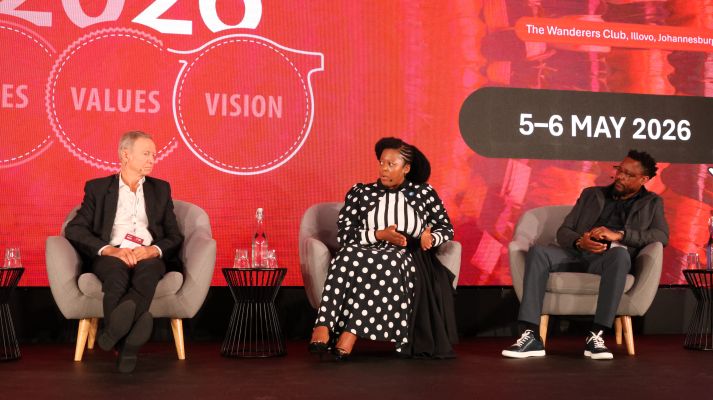
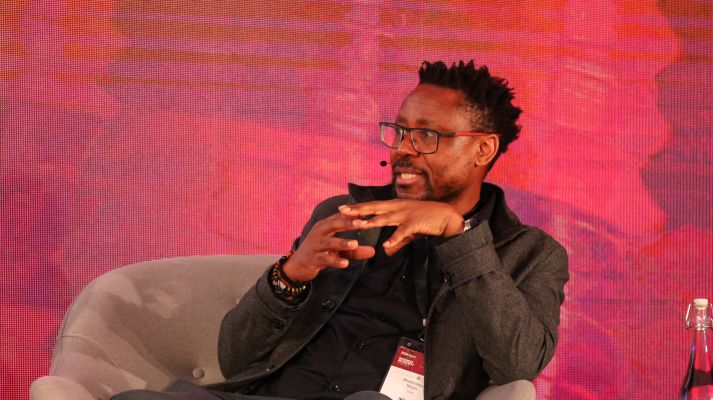
Participating in a featured session titled “Dialogue with Trialogue: Navigating the New Era of CSI”, CAPSI Director and Adjunct Professor at Wits Business School, Professor Bhekinkosi Moyo, joined Nick Rockey of Trialogue and Thandeka Nkambule of Sanlam to explore how global and local shifts are reshaping the role of business in society.
Speaking as a scholar of philanthropy and social investment, Professor Moyo said the global funding architecture is being fundamentally redrawn. He pointed to the gradual retreat of traditional Western funding streams, particularly from Europe and parts of the United States, and the rise of new global actors including China, Brazil and India. These changes, he noted, are not abstract geopolitical shifts; they have practical implications for how African institutions, corporates and development actors position themselves in a changing global order.
Within this context, Professor Moyo emphasised that corporates can no longer be seen as peripheral contributors to development. As traditional sources of funding come under pressure, business is increasingly expected to play a more central role in addressing social challenges and supporting long-term development outcomes.
A key thread in the discussion was the role of young people in reshaping corporate behaviour. Professor Moyo noted that youth expectations are influencing how companies operate, from internal culture to external engagement. Young people are increasingly demanding organisations that are socially conscious, environmentally responsible and purpose-driven.
“If corporates do not respond to this shift,” Professor Moyo cautioned, “they risk losing an entire generation.”
Asked during the session what the biggest factor influencing CSI and development strategy in 2026 is, Professor Moyo pointed to social pressures, including inequality, unemployment and community unrest. These pressures, he said, underline why corporates can no longer treat social investment as separate from core business strategy.
Professor Moyo argued for a move beyond compliance-driven CSI towards more integrated and strategic approaches. He highlighted the importance of aligning profit, people and purpose, noting that social investment should be embedded within core business functions rather than treated as a peripheral activity.
This includes linking CSI to procurement systems, supply chains and long-term growth strategies, enabling organisations to both justify and sustain their social investments. In this sense, CSI becomes not only a moral imperative, but also a strategic lever for resilience and competitiveness.
These reflections were reinforced by contributions from fellow panellists. Nick Rockey of Trialogue noted that while the language of impact, capital and strategy has become more mainstream, there is now a visible shift in practice, with philanthropic and corporate capital increasingly being deployed in more coordinated and impactful ways.
Thandeka Nkambule of Sanlam offered a practical perspective, emphasising that strategic CSI is more sustainable and resilient, particularly in times of economic pressure. She highlighted the importance of moving beyond “tick-box” approaches, noting that well-integrated programmes can create competitive advantage while addressing societal needs.
Nkambule also illustrated the value of ecosystem thinking through Sanlam’s youth-focused initiatives, which extend beyond skills development to include access to markets and long-term opportunities. This reflects a broader shift towards collaborative, system-level interventions rather than isolated projects.
Across the dialogue, a clear consensus emerged: meaningful social impact cannot be achieved in isolation. Speakers emphasised the importance of partnerships across business, government, civil society and communities. Professor Moyo further noted that collaboration should not be seen as superficial alignment, but as a pathway to addressing systemic challenges, including intergenerational wealth shifts, emerging forms of capital and the expectations of younger investors who increasingly prioritise impact alongside financial returns.
The conversation also took place during a significant year for CAPSI. Professor Moyo noted that 2026 marks a decade of CAPSI’s work in advancing African philanthropy, social investment and knowledge production. This anniversary provides an opportunity to reflect on the Centre’s contribution and to position its work within the evolving global and continental landscape outlined during the dialogue.
As the Trialogue Business in Society Conference continues to provide a platform for critical engagement, the insights shared during this session point to a broader transformation in how CSI is understood and practised. From shifting global power dynamics to the rising influence of youth, and from compliance-driven models to integrated, purpose-led strategies, CSI is entering a new era — one that requires organisations to be more responsive, more collaborative and more deeply embedded in the societies they serve.
CAPSI’s work remains anchored in the premise that when knowledge, practice and purpose come together, social investment can move beyond charity to become a catalyst for meaningful and sustained change.
The Trialogue Business in Society Conference 2026 continues to serve as a leading platform for dialogue on the “S” in ESG, bringing together representatives from companies and nonprofit organisations to explore “Voices. Values. Vision.”
Read more about Trialogue here: https://trialogue.co.za/
DID YOU KNOW?
The Centre on African Philanthropy and Social Investment (CAPSI), based at Wits Business School, University of the Witwatersrand, is a leading African research and teaching hub focused on philanthropy, social investment and development financing. In 2026, CAPSI marks its tenth anniversary of advancing African scholarship and practice in this space.
About Trialogue: Trialogue is a leading South African corporate responsibility consultancy. The Trialogue Business in Society Conference is one of the country’s foremost convenings on corporate social investment and the “S” in ESG, bringing together representatives from companies, nonprofit organisations and government.
Spokesperson available for interview: Professor Bhekinkosi Moyo, Director, CAPSI, and Adjunct Professor, Wits Business School. Professor Moyo is available for media interviews on CSI trends, African philanthropy, and the shifting global development funding architecture.
SUPPLIED.