

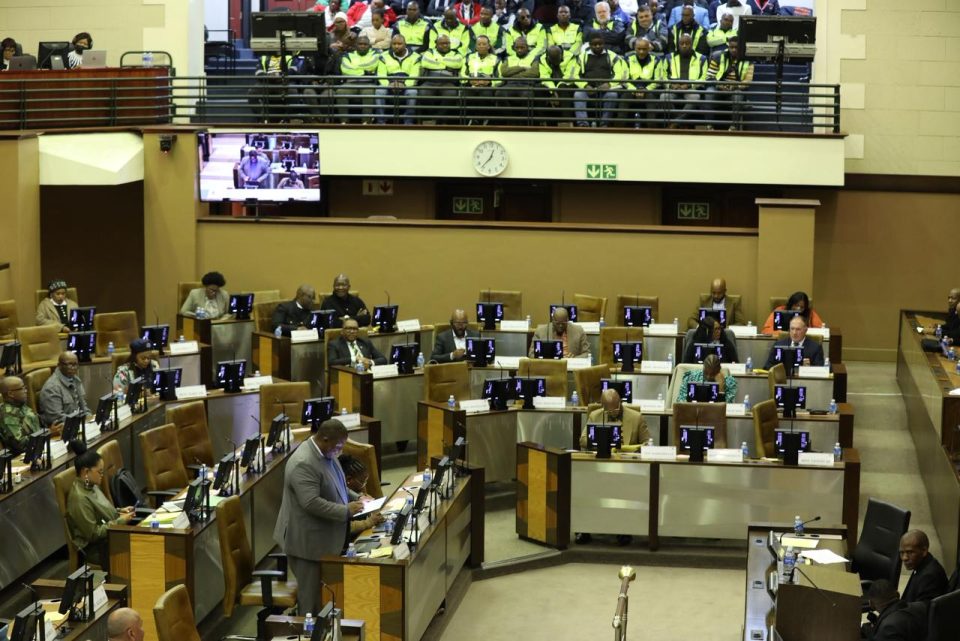
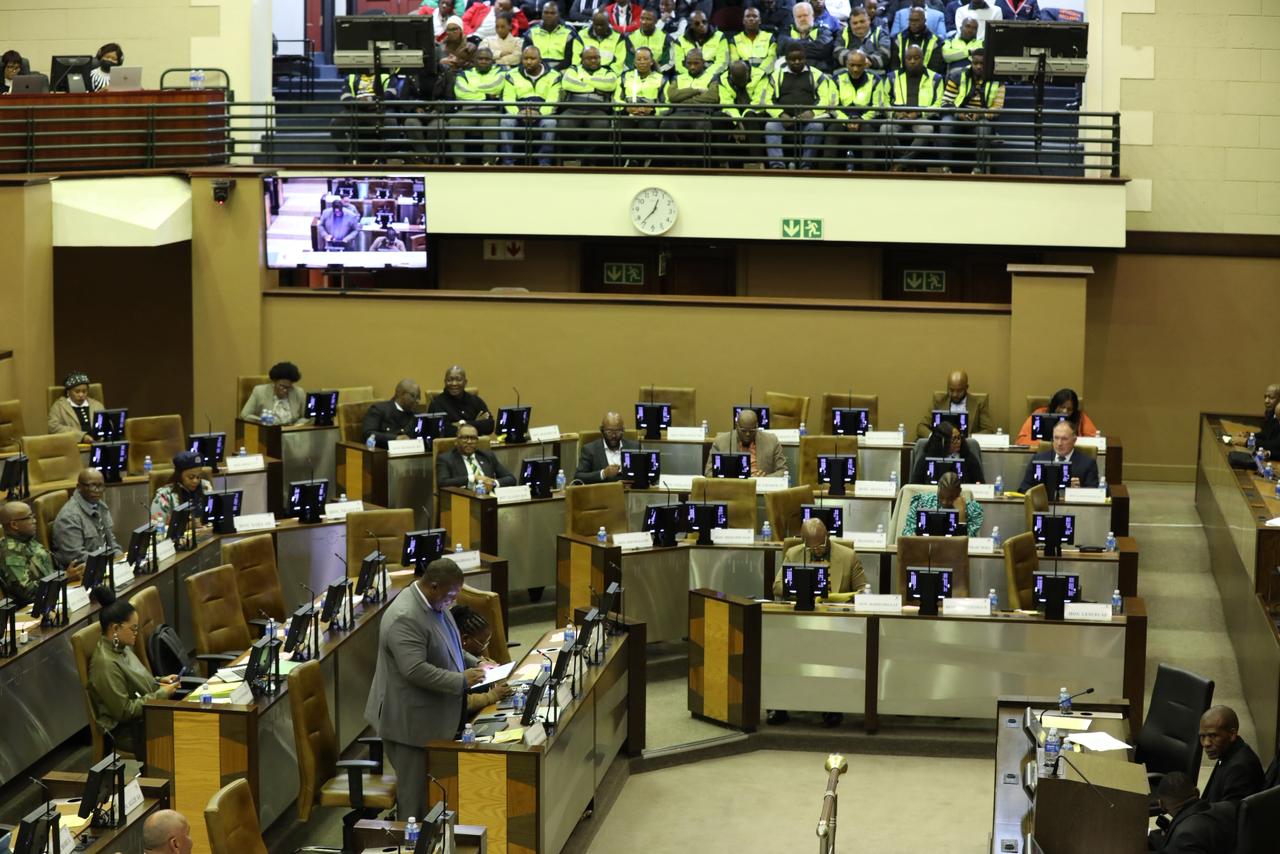
It is an honour and a profound privilege to rise in this House to table the 2026/27 Budget Vote of both the Gauteng Department of Infrastructure Development and the Gauteng Infrastructure Financung Agency (GIFA). This Budget Vote is about building a capable state, accelerating infrastructure delivery, preserving public assets, tackling unemployment and building a modern infrastructure system capable of supporting Gauteng’s growth and development ambitions.
It is about ensuring that every rand spent in social infrastructure translates into tangible improvements in the lives the people of Gauteng through better schools, healthcare facilities, government buildings, community infrastructure, job creation programmes and sustainable public asset management. Honourable Speaker, this year marks 50 years since the historic June 16, 1976 uprising, when thousands of young learners rose in defiance of an unjust system and changed the course of our country’s history.
The courage, sacrifice and determination demonstrated by the youth of 1976 remain a powerful reminder that every generation carries a responsibility to build a better future for those who come after it.
As a democratic government, one of the most meaningful ways we honour their legacy is through building a capable developmental state that creates opportunities for all, especially the youth , improves access to services and creates the conditions for future generations to realise their full potential.
Infrastructure remains one of the catalytic instruments available to government to achieve these objectives. Every school we build expands access to education, every clinic we build or upgrade improves healthcare outcomes, every public facility we maintain strengthens the ability of the state to serve our communities, and every infrastructure project creates economic activity, supports jobs and contributes to the long-term developmental goals of our province.
It is only fitting that we present this Budget Vote at a time when the Department is transitioning from institutional recovery to sustained delivery and growth.
Honourable Speaker, the Department has been allocated a total budget of R3.657 billion for the 2026/27 financial year. Of this amount, R3.028 billion is allocated to the Public Works Programme, R453 million to Administration and R176 million to the Expanded Public Works Programme.
This budget reflects government’s commitment to building a capable developmental state through infrastructure investment, asset preservation, job creation and improved service delivery.
The Department’s budget is primarily driven by seven key expenditure areas, namely rates and taxes, compensation of employees, office accommodation, infrastructure projects, Expanded Public Works Programme initiatives, legal services and security services.
The balance of the budget is directed towards operational requirements including soft services, information and communication technology, provision of tools of trade, government fleet management and other essential support services.
A total of R1.271 billion has been allocated towards the payment of municipal rates and taxes, ensuring compliance with statutory obligations and supporting the financial sustainability of municipalities across the province. To preserve and safeguard government assets, R183 million has been budgeted for the rehabilitation, maintenance and upgrading of public infrastructure.
An amount of R308 million has been set aside for office accommodation, while R101 million has been allocated for security services to protect government properties and strategic assets across Gauteng. In line with government’s commitment to poverty alleviation, skills development and job creation, the Department has allocated R128. million towards short-term employment opportunities under the Expanded Public Works Programme.
This allocation includes R101 million for National Youth Service stipends, R12.6 million for the EPWP Incentive Grant Programme and R15 million for skills development and training interventions aimed at enhancing employability and creating sustainable livelihood opportunities.
Honourable members, while these allocations are important, budgets alone do not deliver infrastructure. Institutions, systems and leadership does.
I am pleased to report to the people of our province and this august house that efforts to bring stability in leadership will largely be addressed by the end of July 2026.
The 2026/27 financial year marks the mid-term of the seventh democratic administration and provides an important opportunity to assess the impact of our interventions and the progress made in rebuilding the Department of Infrastructure Development as a strategic infrastructure delivery arm of government.
In the past two years we undertook an intensive assessment process where we reviewed the Department’s performance and delivery systems.
The findings confirmed that infrastructure delivery was fragmented, inconsistent and broken. Furthermore, the infrastructure delivery model known as the Infrastructure Delivery Management System (IDMS) was insufficient to address the complex, chronic and severe challenges facing the Department.
It was by no accident that in August 2025, we launched the DID Turnaround Strategy, a bold and comprehensive programme designed to fundamentally reset the Department and restore its ability to effectively plan, manage and deliver public infrastructure.
Ultimately, the turnaround strategy will restore compliance, strengthen accountability, improve performance and deliver quality public infrastructure that creates social and economic value for the people of Gauteng.
The turnaround strategy confirmed that our problems could not be addressed through a silver bullet approach. It is for that reason that, the plan is anchored around five pillars implemented within an ecosystem environment. The pillars jointly deliver dynamic and diverse toolbox of solutions to ensure full integration across the entire delivery value chain.
The multiple pillars include the Infrastructure Readiness Matrix (PRM) to ensure proper planning across various implementation stage-gates. The Project Readiness Matrix is automated through the award-winning infrastructure delivery platform known as iDEP which creates a “single source of truth” by offering a holistic and real-time view of project performance.
The multi-disciplinary infrastructure A-Team consist of in-house build professionals, engineers and artisans. It provides quality assurance, daily monitoring and technical oversight – and further assists the Department to unlock challenges and to fast-track construction work on site.
The infrastructure A-Team has already conducted more than 500 on-site inspections and has become critical components of the ecosystem.
Allow me to extend a warm welcome to members of the A-team invited in the house today. The Project Governance Lab helps to enforce project governance and compliance standards as well as consequence management.
A panel of Turnkey Rescue Contractors has been set up for emergency interventions in cases where underperforming contractors fail to complete projects due to technical or cashflow challenges.
Lastly the ecosystem also consists of a robust stakeholder relations component which focuses on unlocking planning and by-law compliance challenges across all municipalities. As we speak, the turnaround strategy is in full swing delivering positive results. We are gradually restoring DID’s capabilities to ensure that the organization is able to operate at its peak performance.
Honourable Speaker, the turnaround strategy has been further strengthened by the significant institutional realignment undertaken by the Seventh Administration.
The decision by Premier Panyaza Lesufi to consolidate the Department of Infrastructure Development, the Gauteng Infrastructure Financing Agency and the Department of Cooperative Governance and Traditional Affairs under a single Executive Authority was both strategic and visionary.
This realignment recognised that infrastructure delivery, infrastructure financing and intergovernmental coordination cannot operate in isolation if Gauteng is to successfully address its developmental challenges. Together, DID, CoGTA and GIFA now form an integrated platform capable of planning, financing and delivering infrastructure in a coordinated manner.
This institutional arrangement sits at the heart of our vision for Building Smart Cities in Gauteng. When the Honourable Premier delivered the 2024 State of the Province Address, he identified thirteen strategic challenges facing the province, commonly referred to as the G13.
These challenges include water security, energy security, infrastructure backlogs, urban decay, unemployment, spatial inequality and waste management. Our Smart Cities programme represents a practical response to these challenges through integrated planning, technology, infrastructure investment, innovation and governance systems. Within this framework, DID provides infrastructure delivery capability, CoGTA drives intergovernmental collaboration, while GIFA serves as the province’s infrastructure financing engine.
Through this institutional alignment, the province is now better positioned to support municipalities through infrastructure planning, technical support, project preparation, financing solutions and intergovernmental coordination.
This integrated approach is helping to strengthen municipal resilience while advancing the broader objectives of the Smart Cities programme and the G13 agenda.
Honourable Speaker, building Smart Cities requires more than infrastructure delivery alone. It requires innovative financing mechanisms, strategic asset management and the ability to attract investment into catalytic projects that transform communities and unlock economic growth.
This is the critical role being played by the Gauteng Infrastructure Financing Agency (GIFA).
Through the Property Optimisation Strategy, underutilised government assets are being transformed into productive economic assets capable of generating revenue and supporting development objectives. We also driving urban renewal through the Gauteng Precinct Project in the Johannesburg CBD.
This project seeks to reposition government-owned buildings as catalysts for economic development, urban renewal and investment attraction through innovative public-private partnership models. GIFA has commenced work on the development of a provincial Bulk Infrastructure Masterplan to assess current and future infrastructure requirements across municipalities and support long-term socio-economic development.
This work is being undertaken in partnership with Infrastructure South Africa to prepare bankable projects capable of attracting investment through a range of financing instruments.
Progress is also being made in Alternative Waste Treatment Technology projects across Gauteng municipalities.
The City of Johannesburg project has already secured approximately R2,5 billion and is progressing through procurement processes, while the City of Tshwane project has secured project preparation funding and is advancing towards implementation.
These projects form part of a broader strategy to reduce landfill dependency, promote environmental sustainability and contribute towards energy security.
The provincial government is encouraged by progress towards the development of the 800MW Merafong Solar Park in the West Rand.
Construction is expected to commence during 2027 and will contribute significantly towards strengthening Gauteng’s energy resilience, supporting industrial development and advancing the Province’s transition towards a cleaner and more sustainable energy future.
Honourable Speaker, the true test of any turnaround programme is whether communities can see and experience the difference through tangible improvements in infrastructure delivery. Last year the Department completed only two infrastructure projects during the entire financial year.
Today, I am pleased to report that the Department has moved beyond recovery and is now firmly focused on delivery. Since the beginning of this year , we have successfully completed four state-of-the-art schools that had previously experienced significant delays and missed multiple completion targets.
These include Rust-ter-Vaal Secondary School in Midvaal, Dr W.K. du Plessis LSEN School in Springs, Nancefield Primary School in Eldorado Park and Simunye Primary School in Westonaria. Equally important, we have made significant progress in unlocking long-delayed legacy projects including the Johannesburg Forensic Pathology Laboratory, Bantubonke Early Childhood Development Centre, Randfontein Community Health Centre, Semphato Secondary School, the Bekkersdal Social Integrated Facility and the Women’s Living Heritage Monument. As we stabilise the legacy project pipeline, we are simultaneously building a new generation of projects guided by the principles of the turnaround strategy. These include Savanna City Primary School in Midvaal, Sizuzile Primary School in Tsakane and the ROTARA LSEN School in Carletonville. By the end of the 2026/27 financial year, the Department expects to complete approximately twelve major infrastructure projects.
This will represent one of the strongest infrastructure delivery performances achieved by the Department in many years.
Honourable Speaker, infrastructure delivery is not only about constructing new facilities. It is equally about preserving, modernising and extending the lifespan of existing public assets. During the 2026/27 financial year, the Department will implement 26 rehabilitation, renovation and refurbishment projects across Gauteng.
These include projects at Thubelihle Intermediate School in Soweto, St Ansgar’s Combined School in Randburg, Bafeti LSEN School in Mabopane and Laerskool Generaal Nicolaas Smit in Tshwane. Honourable Speaker, a key lesson emerging from the turnaround journey is that infrastructure delivery cannot succeed without accountability.
The era of chronic delays, weak enforcement and endless extensions must come to an end. Contractors who fail to perform without valid justification will face termination and appropriate contractual consequences.
The Department has already terminated four underperforming contractors and is implementing processes to appoint completion contractors. Public funds must deliver public value. Honourable Speaker, the Expanded Public Works Programme (EPWP) remains one of government’s most important instruments for poverty alleviation, skills development and employment creation. Allow me to extend a warm welcome to EPWP participants invited in the house today.
The programme currently supports approximately 2 500 National Youth Service participants across the infrastructure, social, environmental and cultural sectors.
The Province has set an ambitious target of creating 469 047 work opportunities through the Expanded Public Works Programme by 2029. Behind every EPWP opportunity is a household receiving income. Behind every stipend is a young person acquiring workplace experience. Behind every training intervention is a citizen developing skills that improve future prospects and economic participation.
Honourable Speaker, government property should not lie idle while communities require land for development, economic activity and service delivery.
During the 2026/27 financial year, the Department will dispose of 20 non-core properties and transfer a further 20 properties to qualifying beneficiaries and institutions. The Department will also release 15 identified government facilities and land parcels in support of economic development and job creation initiatives.
In support of sound asset management, the Department will verify approximately 6 250 immovable assets and undertake 25 condition assessments across government facilities. In light of this collective effort, allow me at this point to acknowledge and thank the Head of Department, Mr Rufus Mmutlana, for his support and commitment. I also wish to thank the Chief Executive Officer of GIFA, Mr Oupa Seabi, for his resolute leadership.
I further extend my appreciation to the senior management teams of both DID and GIFA, as well as every official, professional, artisan and support staff member who has embraced the turnaround vision and contributed to rebuilding the institution. Lastly, Honourable Speaker, let me thank the Chairperson of our Portfolio Committee for his revolutionary and principled manner in which he, together with the Honourable Members of the Committee, continues to hold us accountable.
SUPPLIED.