
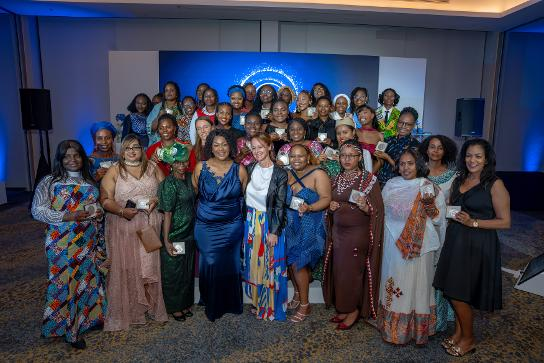
Eight South African women scientists have been recognised among 38 Women Scientists from across Sub-Saharan Africa at the 2026 L’Oréal-UNESCO For Women in Science Awards, held at the @Sandton Hotel on Thursday evening. Representing countries including Nigeria, Botswana, Tanzania, Guinea, Cameroon and South Africa, the thirty doctoral and eight postdoctoral researchers are working across health, energy, water, agriculture and technology.
Selected from more than 1,000 applications, this year’s awardees reflect the breadth of scientific talent shaping the future, with research spanning life and environmental sciences, engineering and technology and beyond. Their research tackles a range of scientific questions with practical implications for the regions. Projects recognised this year include low-cost water filters made from clay and cassava peel, batteries and supercapacitors developed from agricultural waste, and artificial intelligence tools to support disease diagnosis in humans and crops. Other researchers are investigating medicinal plants for potential use against drug-resistant bacteria, monitoring tuberculosis through wastewater and studying genetic variants associated with type 2 diabetes in African populations.
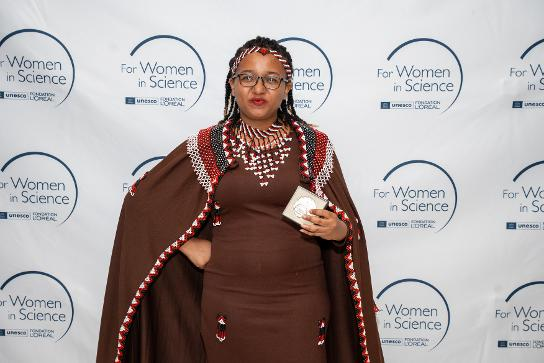
In water management and environmental sustainability, Nonjabulo Mbhele from the University of Cape Town is investigating how municipalities look after water and sanitation infrastructure across its full life cycle, from planning and construction to operation, maintenance and renewal. She is developing performance measures to help identify weaknesses in infrastructure management and support decisions that could make services more reliable.
In a different application of wastewater research, Nikita Singh is exploring how wastewater treatment can go beyond cleaning water to recover valuable resources from the process. She is investigating a 240-litre airlift raceway system combining duckweed and microalgae, examining how the organisms interact within the reactor and their potential to support wastewater treatment and resource recovery for future biofuel production. This research could offer opportunities to make more effective use of wastewater and biological materials while supporting more sustainable production systems.
In crop and agricultural resilience, Shandry Tebele from the University of Cape Town is investigating how some plants survive periods of severe drought, focusing on the relationship between their roots and the microorganisms living around them. Her research compares these drought-tolerant plants with agricultural crops, with the aim of generating insights that could help researchers develop crops better able to withstand water scarcity in a changing climate.
In healthcare and medical research, Johncy Mahapane from the Nuclear Medicine Research Infrastructure at the University of Pretoria is investigating whether the shelf life of Actinium-225 Substance P, an investigational radiopharmaceutical for glioblastoma, can be extended to at least five days. If successful, this could make it easier to distribute the radiopharmaceutical from central production facilities to more distant treatment centres. Alongside research into new treatment options, Roxanne Malan, from the University of Pretoria, is developing an artificial intelligence-supported system that uses a smartphone-connected camera to help identify and monitor voice disorders, with the aim of making assessments more accessible, particularly in underserved communities.
Caitlin Wheeler, from the Wits Donald Gordon Medical Institute at the University of the Witwatersrand, is investigating genetic patterns associated with autoimmune liver disease. Her research aims to improve understanding of these conditions and contribute to evidence that can inform more locally relevant patient care. Hlengiwe Nombuso Mtetwa from Durban University of Technology is investigating how wastewater can provide early warning signals of tuberculosis, drug resistance and other infectious disease threats, potentially helping public-health teams respond more effectively. Also contributing to medical research,
In clean energy and materials science, Lebogang Motsomone from the University of Limpopo is using computer-based modelling to investigate high-entropy alloys as potential materials for hydrogen storage. Her research examines how the composition and structure of these materials influence their ability to absorb hydrogen, contributing to the search for safer and more efficient energy storage technologies.
The recognition comes against a wider backdrop of gender inequality in science. Across Sub-Saharan Africa, several countries are making meaningful progress toward a more inclusive scientific ecosystem. According to UNESCO’s 2025 publication, Status and Trends of Women in Science: New Insights and Sectoral Perspectives, women account for approximately one in three researchers globally and 35% of STEM graduates. In Sub-Saharan Africa, women make up 33.6% of researchers, based on 2022 data. The figures differ across countries: 47.6% in South Africa (2022), 30.6% in Nigeria (2019), 26.1% in Ghana (2015), and 9.8% in Guinea (2013). The challenges also extend into the workplace. An Ipsos study conducted for Fondation L’Oréal, involving researchers across 117 countries, found that 81% of women scientists had personally experienced sexism during their careers, while 49% had experienced sexual harassment.
Michelle Gololo, Corporate Affairs & Engagement Lead at L’Oréal Sub-Saharan Africa, said: “Visibility is part of the answer. When African women’s research is seen, funded and cited, it changes who gets to lead and who believes they can. Our responsibility is to sustain that visibility beyond this ceremony, so these 38 women and the young women who follow them can shape the future of science.”
Award recipients receive a grant of €10,000 if they are PhD candidates or €15,000 if they are postdoctoral researchers, along with training in leadership, science communication, and career development. The For Women in Science programme has been run by Fondation L’Oréal in partnership with UNESCO since 1998. It has supported more than 5,000 researchers from over 140 countries.
SUPPLIED.