

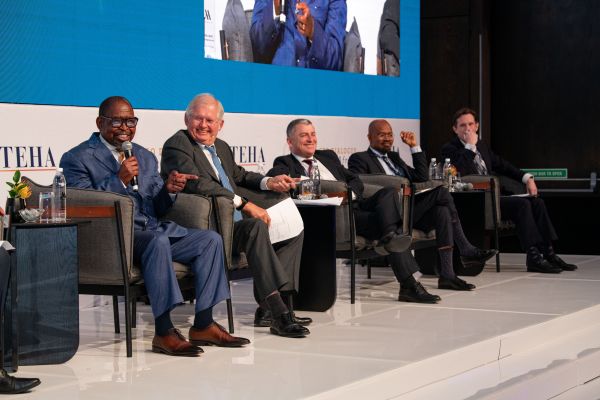
Southern Africa’s economies stand to grow faster together than apart, but only if the region agrees on where it is heading and secures the finance to develop the infrastructure and skills it needs. That was the message from the recent 13th TEHA CEO Dialogue on Southern Africa, which brought together ministers, business leaders, investors and policy experts.
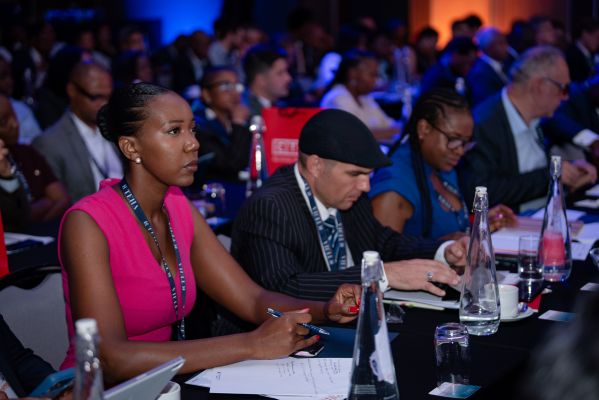
Convened by The European House – Ambrosetti (TEHA), the dialogue examined how closer cooperation across the Southern African Development Community (SADC) could create more competitive economies and wider opportunities for business. Speakers at the event held a common view that regional plans already exist on paper, but the region still lacks a shared picture of the integrated economy those plans are meant to deliver.
Starting with a shared vision
Michelle Gavin, senior fellow for Africa studies at the Council on Foreign Relations, said existing documents and roadmaps need to be anchored in a clearly articulated vision of an integrated regional economy. The vision must also persuade, because smaller economies need confidence that South Africa’s growth will open opportunities for them too. “There’s a real need for articulating narratives of genuine mutual gain,” Gavin said.
Drawing on discussions about North America’s economic future in 2040, she argued that agreeing on the destination first makes it easier to identify the investments and regulatory changes needed to reach it, with business and civil society helping to shape it.
There is an interdependence which runs both ways. African markets are central to South Africa’s manufactured exports, noted Simphiwe Hamilton, director-general of the Department of Trade, Industry and Competition, so the country’s own industrial prospects are tied to the development of its neighbours. TEHA Africa CEO Pietro Mininni saw the relatively low level of intra-African trade as headroom for expansion: “This is a tremendous opportunity, in our view.”
Value chains that can compete
The dialogue’s mining and energy session showed what cooperation could look like in practice. Johannes Gawaxab, former governor of the Bank of Namibia, questioned an approach in which every country builds its own smelter, risking facilities that cannot compete. He proposed regional value chains that link the region’s complementary resources: lithium from Zimbabwe and Namibia, manganese and platinum group metals from South Africa and copper and cobalt from Zambia and the Democratic Republic of the Congo.
What holds that model back is connectivity. “The biggest constraint is that we don’t have integrated infrastructure,” Gawaxab said. Regional processing would only be commercially viable with shared power and transport networks and a reliable supply of competitively priced electricity. Stable rules would also be essential for industrial investments built to operate for decades.
Getting goods to market
The same applies to any producer trying to sell beyond its borders, where the cost and reliability of freight corridors can decide whether a product competes at all. Gauteng MEC for Economic Development, Agriculture and Rural Development Vuyiswa Ramokgopa put it plainly: “Our manufacturers need efficient ports and reliable rail to reach export markets.”
Transnet Freight Rail CEO Russell Baatjies added that rail recovery depends on better maintenance and faster turnaround times to lift capacity, alongside new investment. The industry is thinking in similar timeframes as Alstom’s maintenance contracts will keep the company in South Africa for decades after its trains are delivered, said Tristan Le Masne, Alstom’s managing director for Southern Africa. “Alstom has made this decision to play the long game,” he said, adding that predictability and political stability weigh heavily in such commitments.
Putting African capital to work
Infrastructure on this scale needs funding and speakers argued that much of it could come from within the continent. “We do have capital on the African continent. The question is, how do you mobilise that capital effectively?” asked Finance Minister Enoch Godongwana. Part of the answer lies in credible project pipelines and investment instruments suited to them, he said.
Old Mutual CEO, Jurie Strydom called for closer collaboration between investors and public authorities to channel savings into infrastructure, noting that the payoff reaches well beyond individual projects. “The value of that real investment is that it’s catalytic for growth,” he said. To sustain it, the region’s substantial savings pools need a stronger annual flow of new savings.
Local capital can also help attract foreign investment, as overseas investors often prefer to invest alongside domestic institutions, said Anthony Knox, South Africa country executive at Bank of America. “International capital doesn’t compete with local capital,” he said.
Looking outward and to the next generation
Alongside closer regional integration, speakers highlighted the importance of international partnerships and access to a wider range of export markets. Deputy Minister of International Relations and Cooperation Alvin Botes pointed to cooperation with Europe, including on critical minerals. For Agriculture Minister Willie Aucamp, diversifying export markets would protect farmers from shifts in trading conditions. “South African farmers are resilient but South African markets and market opportunities must also become resilient,” he said.
People also emerged as central to Southern Africa’s economic future, with former Italian prime minister Enrico Letta describing “raw materials and youth” as Africa’s distinctive assets. He stressed that education will shape how well the region turns them into competitive industries and inclusive growth.
From dialogue to commitment
Closing the dialogue, TEHA Africa chairman and former South African finance minister Nhlanhla Nene returned to its central theme that Southern Africa’s economies should develop together, with regional value chains making South Africa’s industrial base a partner to its neighbours. He said the benefits of the African Continental Free Trade Area (AfCFTA) depend on practical gains such as more efficient border crossings and better transport links. He urged delegates to leave with a concrete commitment and report back on their progress at the next dialogue.
For more information on the 13th TEHA CEO Dialogue on Southern Africa, visit https://www.ambrosetti.eu/en/international-summits/teha-ceo-dialogue-southern-africa/
SUPPLIED.