


Mlandzeni Boyce
As we reflect on Africa Border Day (7 June), we are reminded that borders occupy a unique place in our collective consciousness. They define jurisdictions, facilitate governance, safeguard national interests, and regulate the movement of people and goods. Yet they are also points of connection, places where nations meet, cultures interact, and opportunities for collaboration emerge.
Today, conversations about borders across Africa are often accompanied by complex realities. Economic pressures, security concerns, migration challenges, and the aspirations of millions seeking opportunity have placed border management firmly in the public spotlight. These are important issues that deserve thoughtful engagement and practical solutions.
However, Africa Border Day also presents an opportunity to reflect on a broader and equally important question: How can our borders become catalysts for growth, cooperation, and shared prosperity? The answer lies in recognising that borders are not simply lines that separate us; they are gateways that connect us.
Across our continent, communities living near border regions have, for generations, shared languages, traditions, commerce, and livelihoods. Long before modern boundaries were established, Africans traded, collaborated, and built relationships across vast distances. That spirit of connection remains one of our continent’s greatest strengths. Therefore, an Africa Border day would be an occasion to reflect on both the opportunities and the challenges that comes with borders, and to highlight efforts to make borders work better for people, trade and peace.
As Africa continues its journey towards greater economic integration, the efficient movement of goods, services, skills, and investment will become increasingly important. Well-managed borders are critical to this vision. They enable legitimate trade, support economic development, strengthen regional value chains, and create opportunities for businesses and communities alike.
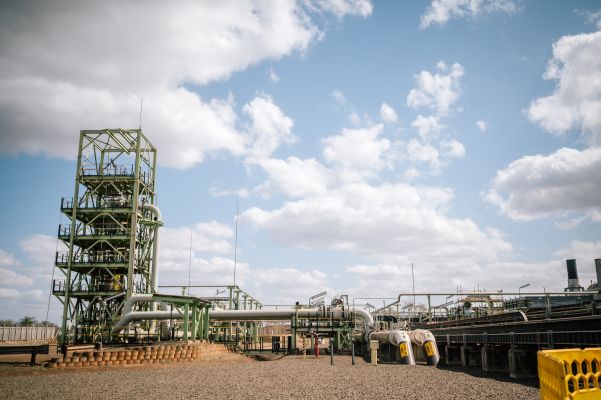
For organisations such as ROMPCO, which operates infrastructure that physically connects countries and economies, this reality is particularly meaningful. Every kilometre of infrastructure that links markets, industries, and communities serves as a reminder that progress is often achieved through partnership rather than isolation. ROMPCO is more than just an infrastructure company. it’s a bridge, between nations, industries, and communities. For more than 25 years, ROMPCO has fueled economies, empowered communities, and invested in people across borders.
Infrastructure alone, however, is not enough.
The future of Africa’s borders will be shaped by our collective ability to foster trust, collaboration, and mutual understanding. It will require governments, businesses, communities, and institutions to work together in ways that balance sovereign interest / priorities with regional opportunities.
Encouragingly, there are many examples across the continent where cooperation has delivered tangible benefits. Cross-border infrastructure projects, regional trade initiatives, and collaborative economic programmes continue to demonstrate what is possible when countries align around shared objectives. These efforts contribute not only to economic growth but also to greater stability and resilience.
At a community level, the impact can be even more profound. Improved connectivity can open access to markets for small businesses, create employment opportunities, enhance access to services, and strengthen social and economic ties between neighbouring countries.
As we mark Africa Border Day, it is important to acknowledge both the challenges and the possibilities that lie before us. The conversations surrounding borders may at times be difficult, but they should never overshadow the tremendous potential that exists when nations choose cooperation over division and partnership over uncertainty.
Africa’s future will not be built by erasing borders, nor by ignoring the legitimate responsibilities that come with managing them. Rather, it will be built by ensuring that our borders function as enablers of development, security, trade, and human progress.
Our collective ambition is not the absence of borders, but the presence of meaningful connections that drive prosperity.
A continent where infrastructure supports opportunity. Where trade creates shared value. Where communities thrive through collaboration. And where borders serve not only as markers of sovereignty but also as symbols of what can be achieved when neighbours work together for a common future.
On this Africa Border Day, let us continue to embrace that vision with optimism, responsibility, and a shared commitment to building a more connected and prosperous Africa for generations to come.
Mlandzeni Boyce, Chief Executive Officer of ROMPCO. He writes in his personal capacity.