

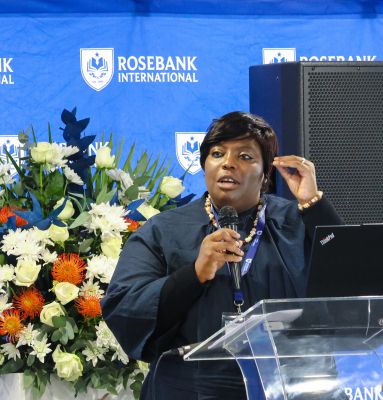
Rosebank International Faculty of Law Research Symposium puts legal ethics and innovation in the spotlight
The Faculty of Law at Rosebank International brought together leading legal professionals, academics, researchers, students and industry stakeholders at its 2026 Research Symposium, creating a platform for critical dialogue on the ethical challenges and opportunities shaping the future of the legal profession.
Held at Rosebank International’s Braamfontein Campus, the symposium focused on the importance of ethical leadership, professional responsibility artificial intelligence (AI) and innovation in an increasingly complex legal landscape.
The programme featured keynote addresses, research paper presentations and opportunities for students and legal professionals to engage on issues affecting the profession. Speaking at the symposium, Judge Sandiswa Mfenyana of the North West Division of the High Court emphasised the importance of integrity and warned of the ethical risks posed by the legal profession’s use of artificial intelligence, particularly when societal issues remain
“Ethics extends beyond mere compliance with legal requirements. The law generally establishes minimum standards of conduct, while ethical considerations may guide behaviour in circumstances where legislation does not provide a clear answer. Professional ethics refers to the shared standards, values and responsibilities that members of a profession undertake to uphold. These standards are not dependent on the personal views or preferences of an individual practitioner; rather, they reflect the responsibilities and expectations attached to being a member of the profession.” she said.
The symposium also highlighted the need for legal professionals to adapt to a rapidly changing environment, where technological innovation, evolving societal expectations, socio-economic factors and emerging legal challenges reshaping the profession.
Associate Professor Michele Van Eck, Wits School of Law, University of the Witwatersrand saidthat there is a real danger in allowing AI to dominate the conversation, although AI has been described as an alternative, it highlights the ongoing ethical errors in the decision making and justice for all.
“The machine (AI) answers for nothing” AI cannot ultimately be held accountable for the decisions it produces or assists with. AI can assist us, but it cannot replace human responsibility and judgement. At the same time, maintaining a strong and ethical legal education system is a shared responsibility requiring academics and practitioners to contribute to solutions
Dr Rufaro Mavunga, Dean of the Faculty of Lawat Rosebank International added that legal ethics is not something one suddenly acquires, neither is it a module encounter but it requires continual engagement and reflection. As the legal landscape changes, one needs to reflect.
“The objective is to create a space for academics, legal professionals and students to share ideas, reflections on legal ethics and professional responsibilities,” noted Dr Mavunga.
The Research Symposium forms part of Rosebank International’s broader commitment to academic excellence, research and the empowerment of graduates equipped to contribute meaningfully to the legal profession and broader society.
SUPPLIED.