
For children undergoing long-term medical treatment, life can change overnight.
Days once spent in classrooms and playgrounds are replaced by hospital wards, while lessons give way to appointments, treatments and recovery.
Yet despite these challenges, every child still has the right to learn. Recognising that illness should never become a barrier to education, the iSchoolAfrica Education Trust, with support from the Trevor Noah Foundation’s Khulani Nathi Innovation Fund, is expanding access to quality education for children receiving long-term hospital care through technology-enabled learning and specialised teacher development.
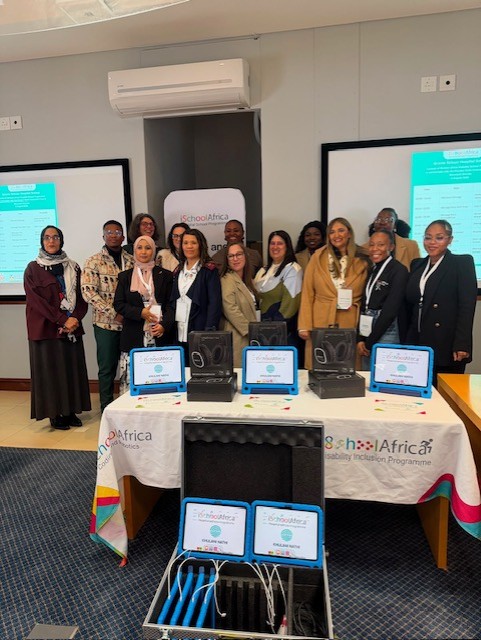
As part of the initiative, facilitated in partnership with the Groote Schuur Hospital Trust, learners at Groote Schuur Hospital School will now have access to a full iSchoolAfrica learning programme – including – Apple iPads loaded with a broad range of educational content.
Educators are also being equipped with specialised training to confidently integrate digital technology into teaching within hospital environments. Hospital schools play a vital but often overlooked role in South Africa’s education system.
They support children whose medical conditions require extended hospitalisation, helping them maintain continuity in their education while navigating some of the most challenging periods of their young lives.
Teaching in these environments demands far more than adapting lesson plans. Educators must respond to learners whose health, energy levels and emotional wellbeing can change from day to day.
By combining technology with ongoing teacher development, the programme is helping educators create more engaging, flexible and inclusive learning experiences tailored to each child’s circumstances.
Beyond supporting academic progress, iPads also provide access to creative, therapeutic and self-regulation applications that can help reduce anxiety, encourage expression and provide moments of normality during treatment.
“Every child deserves uninterrupted access to quality education, regardless of the circumstances they face,” says Michelle Lissoos, Director at iSchoolAfrica.
“Hospital school teachers perform an extraordinary role under incredibly demanding circumstances. By investing in both educators and technology, we’re helping create learning environments where children can continue learning, remain connected to their education and experience a sense of possibility throughout their treatment journey. Technology has the greatest impact when it removes barriers and creates inclusion.”
Michelle continues to say, “ The success of this programme relies on the strength of partnerships. We are grateful to the Trevor Noah Foundation’s Khulani Nathi Innovation Fund, the Groote Schuur Hospital Trust, and the Groote Schuur Hospital School team for working with us to bring this initiative to life.”
Kristy Evans, Executive Director of the Groote Schuur Hospital Trust, says:
“Hospital schools provide children with a sense of normality, hope and continuity during some of the most difficult periods of their lives. We are grateful to iSchoolAfrica and the Trevor Noah Foundation for making this programme possible, and proud to have helped bring this partnership to Groote Schuur Hospital. Together, we are ensuring that children can continue learning while receiving the care they need.”
The initiative forms part of iSchoolAfrica’s broader commitment to using technology to improve educational outcomes and empower educators across South Africa. Support from the Trevor Noah Foundation’s Khulani Nathi Innovation Fund is helping extend this work into hospital schools, backing an innovative approach that ensures children facing serious health challenges are not excluded from educational opportunities.
At the Trevor Noah Foundation (TNF), we believe meaningful change happens when we invest in organizations that understand the communities they serve and develop innovative solutions to real challenges,” says Olona Tywabi, Communications Manager at the Trevor Noah Foundation.
“Children receiving long-term medical care already face enormous disruption in their lives. Through the Khulani Nathi Innovation Fund, we’re proud to support initiatives like this that help ensure their education, confidence and future aspirations don’t have to be put on hold while they receive the treatment they need. Initiatives like these remind us that lasting change is rarely achieved by a single organization. It takes bold ideas, strong partnerships and sustained investment to ensure that every child, regardless of their circumstances, has the opportunity to learn, thrive and realize their full potential”.
“At Microsoft, our commitment is to ensure that technology creates opportunites for everyone. Through the Khulani Nathi Fund and partnerships such as these, we are investing in a future where learners with long-term illnesses are empowered with the skills, confidence and tools to participate fully in the digital economy. When we empower learners with long-term illnesses, we do more than remove barriers, we unlock talent, creativity and innovation that can transform communities and our nation. Together, we are building a South Africa where inclusion is not an aspiration but a reality and where every young person can see themselves as a creator, a leader and a changemaker in an AI-powered world,” says Tiara Pathon, AI Skills Director, Microsoft Elevate. By strengthening both digital learning and educator capability, the programme demonstrates how thoughtful innovation can help build a more inclusive education system, ensuring children continue to learn, grow and imagine their futures, wherever their classroom may be.
SUPPLIED.