

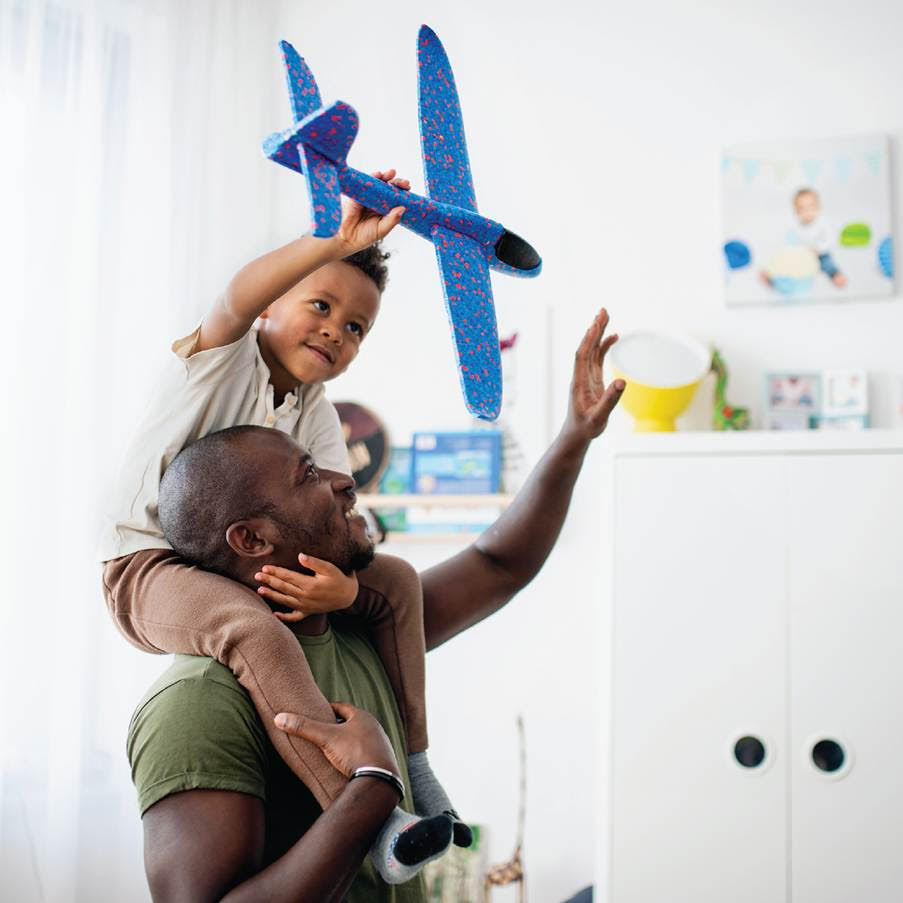
As schools across South Africa close for the long, summer holiday, the associated freedom children feel often coincides with feelings of guilt and pressure for their parents, who now need to keep children entertained and stimulated. Mari Payne, Deputy Managing Director and Senior Director Education and Programs at Sesame Workshop International, South Africa (SWISA) has good news: meaningful learning doesn’t require expensive activities. With a bit of time and a few everyday household items, families can support learning and strengthen bonds through simple play.
According to Payne, playing during the festive break is one of the most powerful ways to foster cognitive, physical, social, and emotional growth. “Learning through play lays the foundation for lifelong learning, including the development of socio-emotional skills in young children, allowing them to learn about themselves and the world around them. Make-believe play in particular helps children use their imagination and develop their creativity. In addition, role-play can help children learn about different jobs and people in and around their community,” she explains.
Payne says fathers and father figures, who are too often associated with mainly financial provision for children, should embrace playful interactions too. “When father figures embrace play, they help to challenge harmful gender stereotypes, and adopt positive parenting practices,” she says. “Using the festive season to bond through play can increase confidence, build stronger parent–child relationships, and produces a visible shift in rigid gender norms at home.”
Findings from SWISA’s Transforming Gender Norms programme reflect this impact: engaged fatherhood can transform families. An independent evaluation found that fathers became more confident and joyful in parenting, and they spent more time in meaningful interactions with their children. “With “lack of time” often cited as a barrier, the festive season break, and school holidays provide the perfect opportunity to embrace play and reconnect,” adds Payne.
Crucially, play does not require expensive toys. “One of the best parts of learning through play is that it’s possible without the use of any toys at all,” says Payne. “Many of South Africa’s children do not have access to many toys, but play is something every child can do, using their imagination along with available household items or recycled materials.”
Payne provides some simple examples of make-believe play below.
- House-house: Make a ‘home’ or a ‘fort’ using a blanket and chairs and reinforce game-like day-to-day routines such as ‘going to bed’ or reading, or say, “Let’s pretend to make supper!”
- Play Restaurant: Work on memory skills as you take each other’s orders and brainstorm delicious recipes to cook. Ask children, “What ingredients do we need? What tools can we use to cook?”
- Bath time: Pretending to wash a doll is an opportunity to learn parts of the body and encourages hygiene and self-care.
Payne reminds parents and caregivers that routine chores can also be opportunities to play and learn. “Sorting laundry can be a fun learning game by sorting according to colour or by type of garment. We can also look for shapes while shopping and ask your child about the shapes they can identify,” she adds.
Payne reminds us of some favourite South African games to play:
- Morabaraba; trying to get three ‘cows’ in a row.
- Kgati; the skipping rope game.
- Diketo; ‘the stone throwing game’ – remember the adults need to play with their non-dominant hand!
Wherever you are this festive season, Takalani Sesame is also available on multiple platforms to support parents with educational content for children. Whether it’s watching favourite episodes on SABC 1 and 2 and eTV, or streaming them on Showmax, or following Takalani Sesame on YouTube for stories, tips, behind-the-scenes fun – Takalani is here to help little ones grow smarter, stronger, and kinder, every day.
Parents and caregivers can connect directly with Takalani Sesame on WhatsApp for free learning tips, videos, and activities, simply by sending “Hi” to 060 053 0000.
Payne concludes, “quality play time does not require the purchase of expensive toys or outings; simple make-believe play, games and doing things together, provide opportunities to learn, memorable family time, and joyful moments, which children often remember most.”
SUPPLIED.