

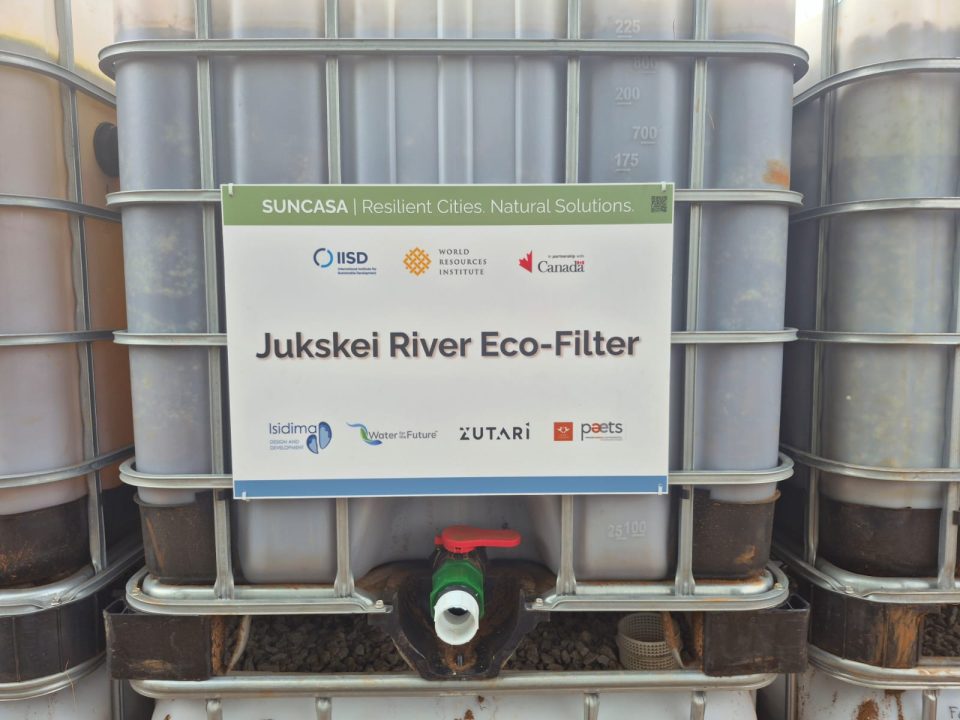
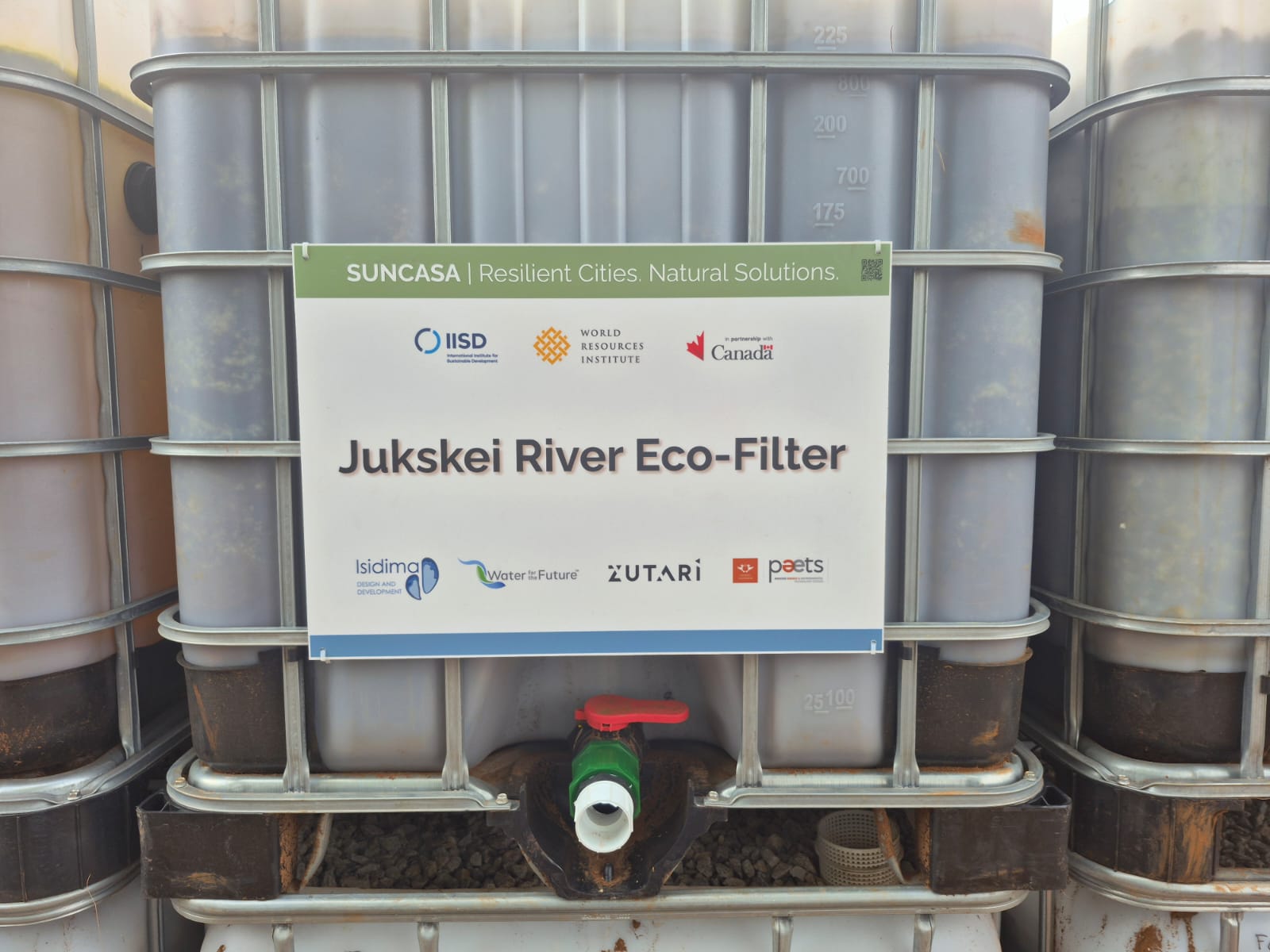
The City of Johannesburg, in collaboration with the Scaling Urban Nature-based Solutions for Climate Adaptation in sub-Saharan Africa (SUNCASA) project and its partners, has unveiled anew nature-based eco-filter system aimed at improving water quality in the Jukskei River.
Installed in the Upper Jukskei River catchment, the eco-filter system will help address persistent water pollution challenges in the river. These including microbial contamination, excess nutrients, organic waste, and heavy metals. The system provides accurate monitoring data, demonstrating the potential of the system to improve water quality while supporting the irrigation of women-led community gardens at Victoria Yards in Johannesburg’s inner city.
Designed to function like a natural wetland, the system enables continuous water quality monitoring, generating long-term datasets to assess performance and inform evidence-based decision-making. These data will help document progress—highlighting both successes and ongoing challenges in catchment management—while supporting learning and replication in other parts of Johannesburg and across sub-Saharan Africa.
The eco-filter consists of modular 800-litre units arranged in a series of ecological treatment cells, supporting both anaerobic and aerobic processes for water purification. While its primary function is to support biophysical monitoring of the Jukskei River, it also delivers tangible benefits to the local community by supplying water for the irrigation of community gardens in the area.
The eco-filter system is the result of collaboration between Isidima Design and Development, Water for the Future, Zutari, and the University of Johannesburg. It will be operated and maintained by trained personnel from Water for the Future.
Richard Grosshans, International Institute for Sustainable Development (IISD) and SUNCASA’s Bioremediation Lead, said the eco-filter system offers an innovative approach to improving water quality.
“Although the system is not designed to make the Jukskei River water potable or resolve catchment-wide pollution on its own, it serves as a visible and monitored bioremediation solution that reduces pollution loads and demonstrates the value of integrated green infrastructure. This model has strong potential for replication in other cities,” he said.
Daniel Masemola, Director of Water Management and Biodiversity at the City of Johannesburg, emphasised the City’s commitment to sustainable environmental management. “The City is transitioning from reactive approaches to proactive, innovative solutions that restore the health of our urban rivers. The eco-filter system marks a significant step in integrating nature-based solutions with smart monitoring technologies.”
“We view this as a scalable model for strengthening urban water resilience, aligned with our broader goals of ecological restoration, climate adaptation, and sustainable service delivery,” he added.
SUPPLIED.